
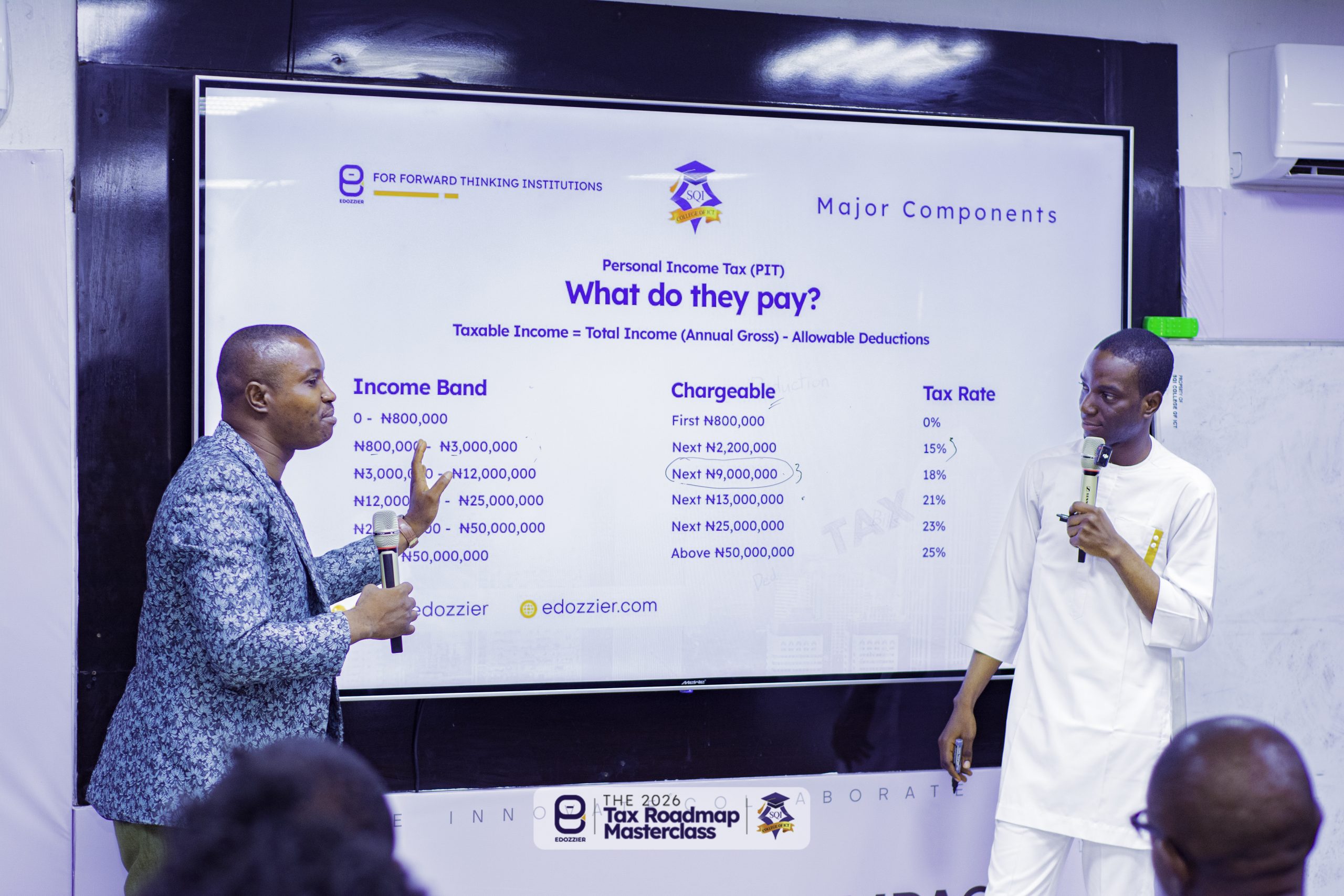
The unmistakable message the new tax reform brings to every school leader, board chair, bursar, and administrator is simple: tax compliance is no longer optional, it’s strategic.
In 2026, every school in Nigeria will make a choice in response to the new tax laws. Some will invest early in stronger systems and operate with clarity and confidence. Others will be compelled to react later, under the weight of penalties, back taxes, and avoidable disruption.
This article is about the difference and why one path is faster, cheaper, and far less disruptive than the other.
The Two Paths Every School Is Already On
Whether you realise it or not, every school owner in Nigeria is already walking one of two paths.
There is no third path.
Path 1: Paying for Compliance Failures
Life continues as usual.
- PAYE is remitted “most months.”
- Contractor payments are handled informally.
- Records live across spreadsheets, WhatsApp threads, and someone’s memory.
It starts quietly. Nothing deliberate. Nothing malicious. Just a few inconsistencies that accumulate over time. Then the Nigerian Revenue Service (NRS) calls. Or send a letter.
What follows is never cheap.
Under the Personal Income Tax Act, failure to file PAYE returns attracts a minimum ₦500,000 penalty for corporate employers per year. However, the penalties for Withholding Tax (WHT) and Company Income Tax (CIT) differ.
That typically means:
- Penalties that compound monthly
- Emergency accountant fees to reconstruct records (₦300,000+)
- Back taxes, plus interest
- Operational disruption while everyone scrambles
Total financial cost: ₦500,000 to ₦20,000,000 or more.
Yet for most school owners, this cash loss is still their smallest headache.
The larger cost is the REPUTATION.
Quiet conversations begin about your school “having issues with the authorities.” And credibility, once shaken, is far more expensive to rebuild than the school itself.
Path 2: Paying for Compliance Infrastructure
The alternative brings pride instead: DIGITIZATION
You get organised early. Payroll, staff records, and financial data are digitised and centralised. Reports are available when needed. Deadlines are visible before they pass.
The cost is predictable:
- Starting from ₦150,000 annually, depending on school size
- Clean records that can be produced in minutes, not weeks
Total penalties paid: ₦0.
The maths is simple.
Yet most school owners still end up on Path 1 not deliberately, but by doing nothing and hoping it doesn’t matter.
Some top Nigerian Institutions such as the Nigerian University of Technology and Management, Nigerian Baptist Theological Seminary, SQI College of ICT, etc have already begun this transition, using platforms like Edozzier and other tools custom built for the unique operations of Nigerian schools and they’ve found that regulatory compliance becomes clearer, faster, and far less disruptive as a natural outcome of better organisation.
Not for show, but for survival. Manual processes collapse under regulatory pressure. Institutions that are better prepared tend to have one thing in common: their academic, administrative, payroll, and financial records speak to each other. When everything connects, compliance stops being a monthly crisis and becomes a background process.
The Decision You’re Making Right Now
You’re going to spend money on tax compliance in 2026. That’s not optional.
The only question is whether you spend ₦50,000 – ₦150,000 now to adopt systems that keep you compliant and penalty-free, or whether you spend ₦500,000 – ₦20,000,000 later cleaning up violations you didn’t see coming.
The schools that choose Path 2 this month will have less stress, lower costs, and stronger institutions by the end of the year.
The schools that stay on Path 1 will have expensive lessons to share about why “we’ll figure it out later” stopped working in 2025
Which path are you on?